The Newsletter Flywheel Behind Every 7-Figure Business
Most businesses blast updates and call it growth. Successful ones run a four-stage newsletter flywheel that compounds. Here's the system and how to run it.

8 min read
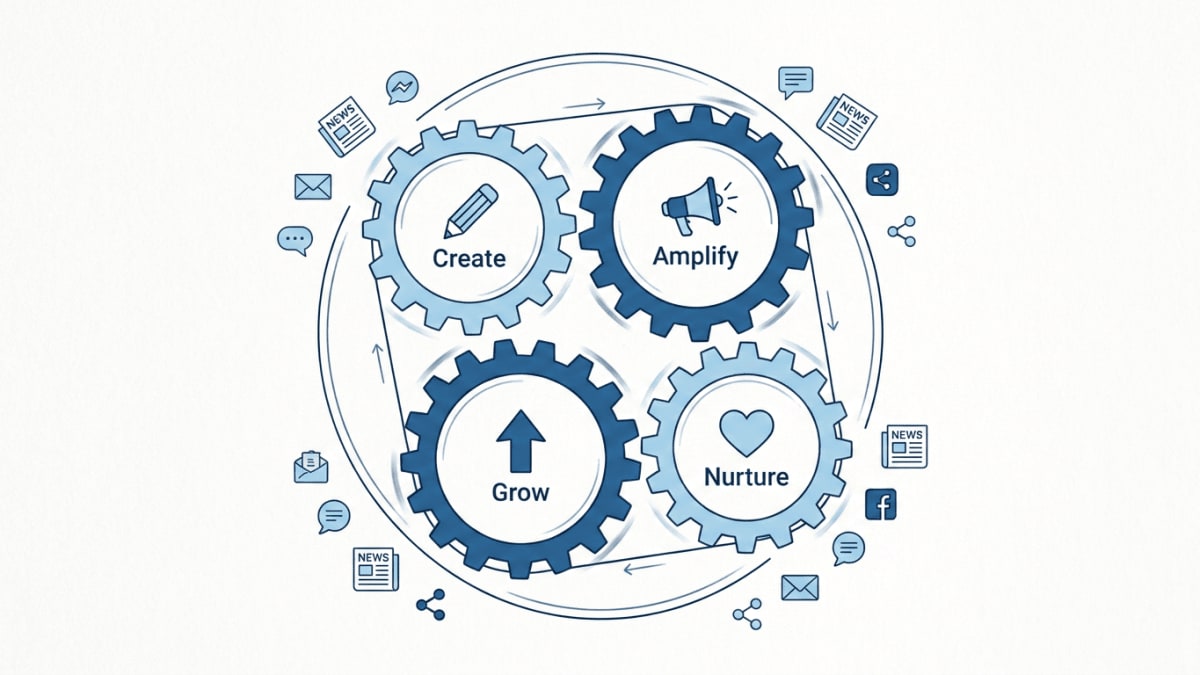
Most businesses blast out content and call it a growth strategy. Company updates, product announcements, maybe a quarterly recap nobody asked for. Then wonder why it "doesn't work."
But the brands actually growing from their newsletter aren't doing any of that. They're running a system. A four-stage flywheel that creates high-value content, amplifies it across platforms, nurtures subscribers into customers, and feeds growth back into the machine.
And the best part? I'm going to show you exactly how they're doing it.
Your newsletter is the hub
Think of your newsletter as the center of a wheel with four spokes. Your newsletter feeds each of those spokes, and in turn, they fuel your newsletter, creating a virtuous cycle of growth:
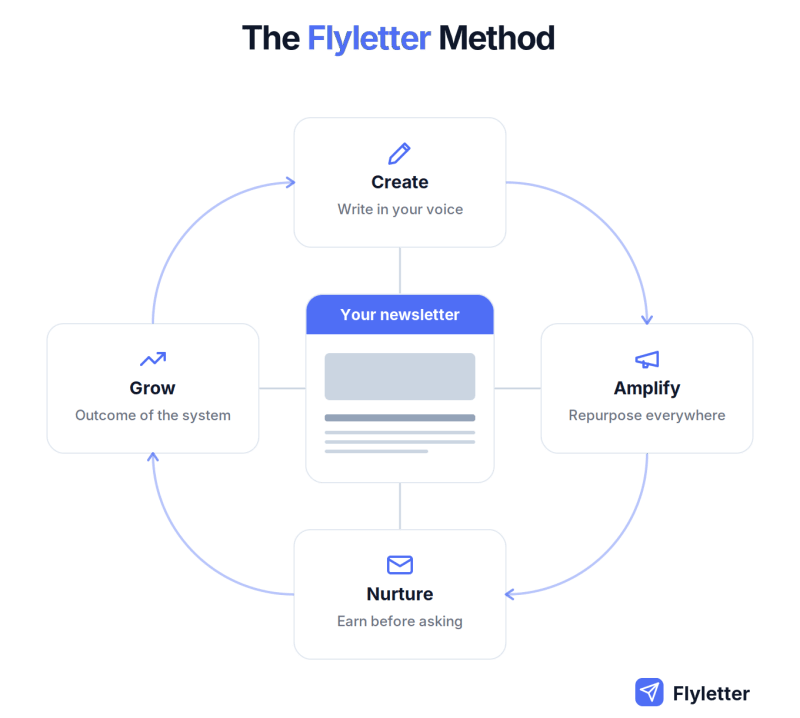
I call it the Flyletter Method, and it positions your newsletter to create, amplify, nurture, and grow your brand:
- Create. Write content your audience actually wants to read (not corporate updates, not product announcements, not "we're excited to share" press releases).
- Amplify. Repurpose that content across social platforms to drive new eyeballs back to your newsletter and capture emails with content upgrades and intro offers.
- Nurture. Use your newsletter to build trust over time. Give value before you ever ask for anything. Think jab, jab, jab, right hook (Gary V. style).
- Grow. Convert engaged subscribers into customers, then use customer insights to fuel the next round of content.
Each spoke feeds the next. Your content fuels amplification. Amplification drives subscribers. Subscribers get nurtured. Nurtured readers convert. And converted customers give you the data and stories to create better content.
That's the flywheel. It compounds. And email marketing still generates $36 to $40 for every dollar spent, which means the math works even before you nail the execution.
Most businesses only do spoke one (and badly). The brands winning right now do all four.
How top business brands run this framework
Carta: customer data as content fuel

Carta is a cap table management platform, and their newsletter strategy is one of the smartest I've seen:
Create. Carta doesn't write about Carta. They write about the data only Carta has access to. Fundraising trends, valuation benchmarks, compensation data across startups. Their newsletter reads like an industry research report because it's built on proprietary insights from their own customer base. Report-style, not corporate updates.
Amplify. This is where Peter Walker comes in. Walker is Carta's head of insights and the public face of their data content. He's built 170k followers by consistently posting Carta's data insights on LinkedIn. Every post drives traffic back to the newsletter. Every newsletter drives traffic to Carta.
Nurture. When you subscribe to Carta's newsletter, you're getting genuinely useful industry benchmarks. You're not being sold to. You're being educated. You're using the insights as competitive intelligence.
Grow. By the time a founder needs cap table software, Carta is already the trusted authority in the room, using high-value content to convert subscribers into customers over time.
RB2B: founder-led distribution machine

RB2B is a website visitor identification tool. Adam Robinson, their CEO, is also the face of their entire content strategy:
Create. Robinson writes domain-specific content as well as thought leadership insights for founders and more. I'm sure he's not actually crafting all the content (though perhaps he is). Since RB2B is a SMB tool and Adam advises startups, their newsletter content gives relevant insights to that audience.
Amplify. Robinson grew to 150k followers and scaled RB2B to $5M ARR in 12 months using LinkedIn and YouTube as the primary distribution channels. He posts daily, driving followers to check out RB2B for free, where users are added to their email newsletter list for nurturing, and also uses the newsletter as a lead magnet on their blog posts.
Nurture. RB2B offers a free tier of their product. The newsletter nurtures free users by showing them the thinking behind the product, the problems it solves, and the results other companies are getting. By the time a free user is ready to upgrade, they already trust Robinson and understand the value.
Grow. Free users convert to paid. Paid customers generate usage data and case studies. Those stories fuel the next round of content. The flywheel spins faster with every cycle.
What both brands get right
There are three things that separate Carta and RB2B from every other brand I see:
1. A face to the name
Both brands put a real person front and center. Peter Walker for Carta. Adam Robinson for RB2B. People subscribe to people, not logos. If your newsletter comes from "The [Company] Team," you're already losing.
2. Insights, not updates
Neither brand sends product announcements or company news as their primary content (if at all). They send insights their audience would read even if the product didn't exist. Carta sends data analysis. RB2B sends sales and marketing tactics with founder lessons. That's the bar.
Most corporate newsletters are forgettable because they're about the company, not the reader. Flip that ratio.
3. Customer data as content fuel
This one is underrated. Carta literally builds content from their customer data. RB2B builds content from their customer experiences. Your customers are already giving you the raw material for your best newsletter content. Usage patterns, common questions, success stories, failure points. Most brands ignore this goldmine.
Build this newsletter flywheel with Flyletter
Okay, so you've seen the framework and the brands running it. Now let's talk about actually doing it without a content team.
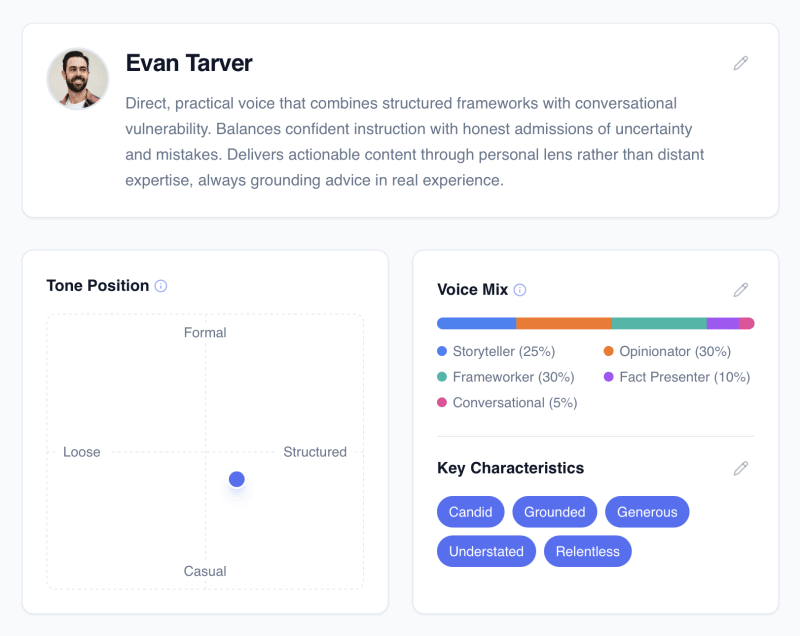
Step 1: Set up your brand profile
Your brand profile is the foundation. It teaches Flyletter your voice, your audience, your niche, and your visual style. Everything that follows pulls from this profile. Spend 10 minutes getting it right.
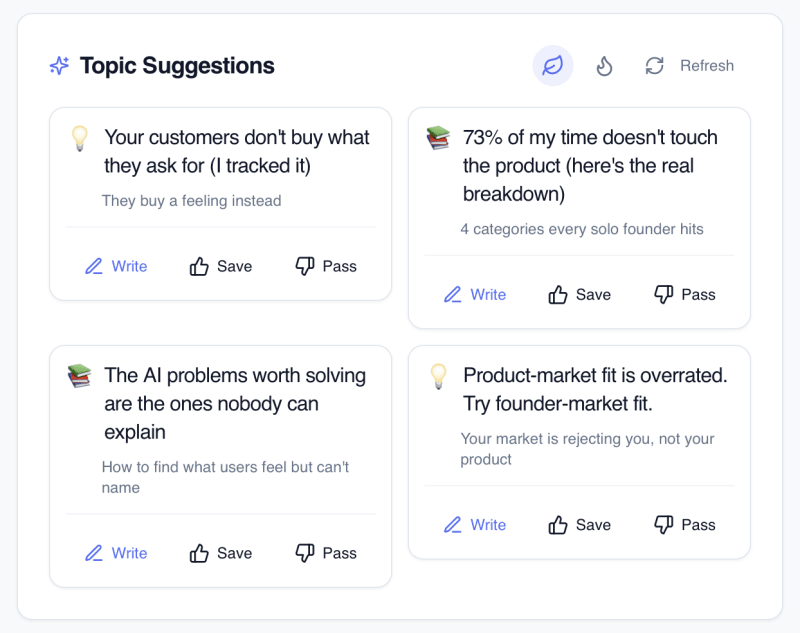
Step 2: Generate topic ideas
Flyletter suggests topics based on your niche, audience, and connected content sources. You'll get both evergreen ideas and timely topics powered by Google Trends. Pick the one that fits your current newsletter cycle.
But you can also capture ideas on the fly (no pun intended) by chatting with Flyletter whenever inspiration hits. Way better than a notes app graveyard.
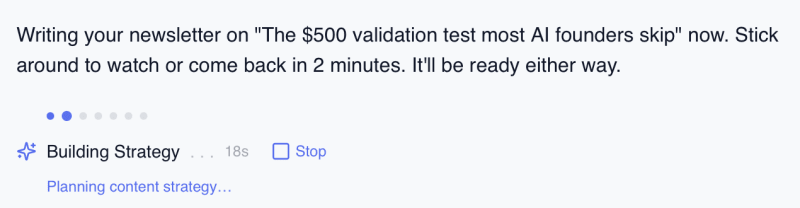
Step 3: Let the AI writing pipeline draft your newsletter
Once you've got your topic, Flyletter's multi-agent content team takes it from idea to draft. The pipeline includes research, outlining, writing, and editing, all calibrated to your brand voice. You review, edit, and approve.
Step 4: Generate social posts for amplification
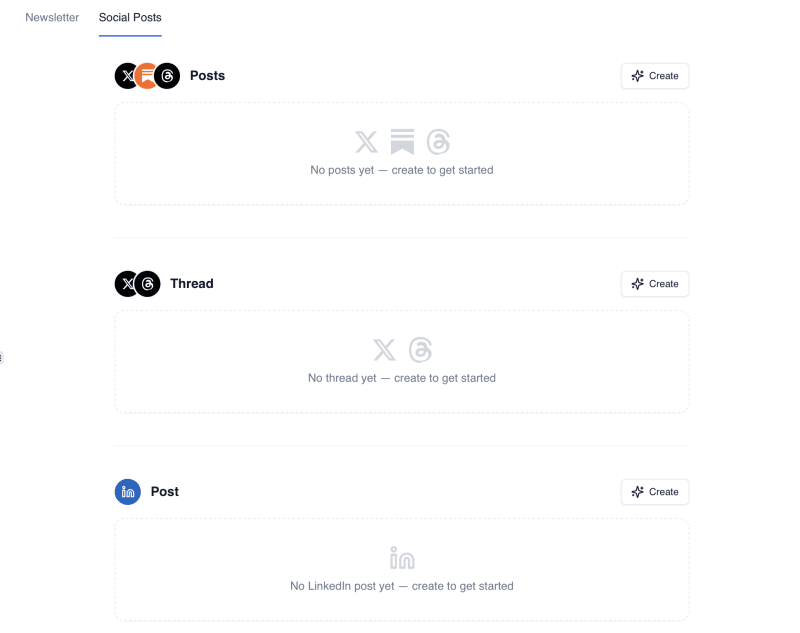
This is the amplification spoke. Flyletter's Publicist Agent automatically generates platform-specific social posts from your finished draft. Different posts for LinkedIn, X, Threads, and Substack. Each one provides standalone value and drives readers back to the full newsletter.
Step 5: Schedule and repeat
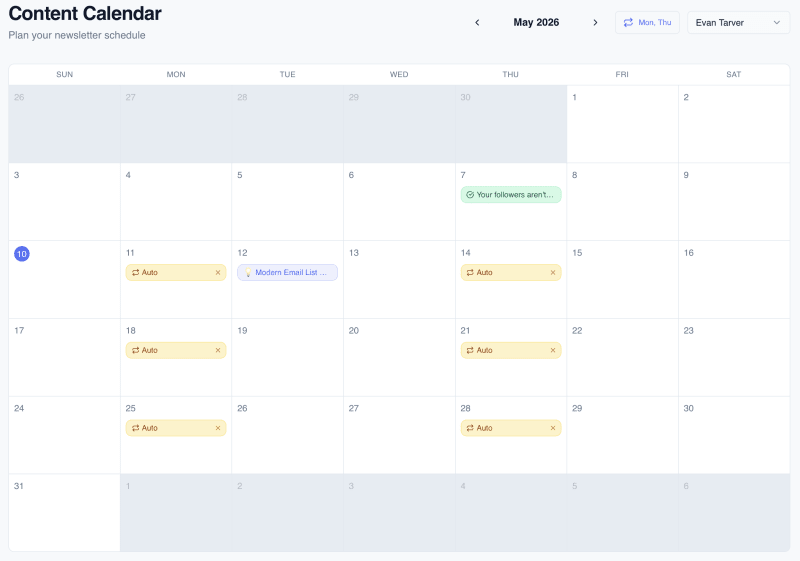
Use Flyletter's auto-write feature to keep the flywheel spinning on a consistent schedule. All you have to do is choose a writing schedule, and Flyletter will draft your newsletter while you sleep. All you need to do is wake up, review, and send.
The loop that keeps compounding
The framework isn't a one-time setup. It's a loop.
Every newsletter you send teaches you what your audience cares about. Open rates, click-throughs, replies, social engagement. That data feeds your next topic. Your next topic creates better content. Better content drives more amplification. More amplification grows your subscriber base. A larger base gives you more data.
Carta figured this out. RB2B figured this out. The framework is the same. The execution is what makes it yours.
You don't need a content team of five. You don't need to spend hours every week staring at a blank doc. You need a system that creates, amplifies, nurtures, and grows. And then you need to run it consistently. The complete guide to AI newsletter writing covers both.
Start building your newsletter growth engine with Flyletter. Sign up for a free account, create your brand profile, and get your first AI-generated newsletter draft. The flywheel doesn't spin itself, but it gets a lot easier once you stop pushing by hand.