The 4-Stage Newsletter Flywheel Behind Creators Who Actually Grow
Most creators broadcast into the void. The ones building real businesses run a four-stage flywheel: create, amplify, nurture, grow. Here's exactly how it works.

8 min read
Most creators are broadcasting into the void.
They write a newsletter, hit send, and hope someone reads it. Then they post on social, hope someone follows. Then they make an offer, hope someone buys. Hope, hope, hope (my dad always told me hope is a bad strategy).
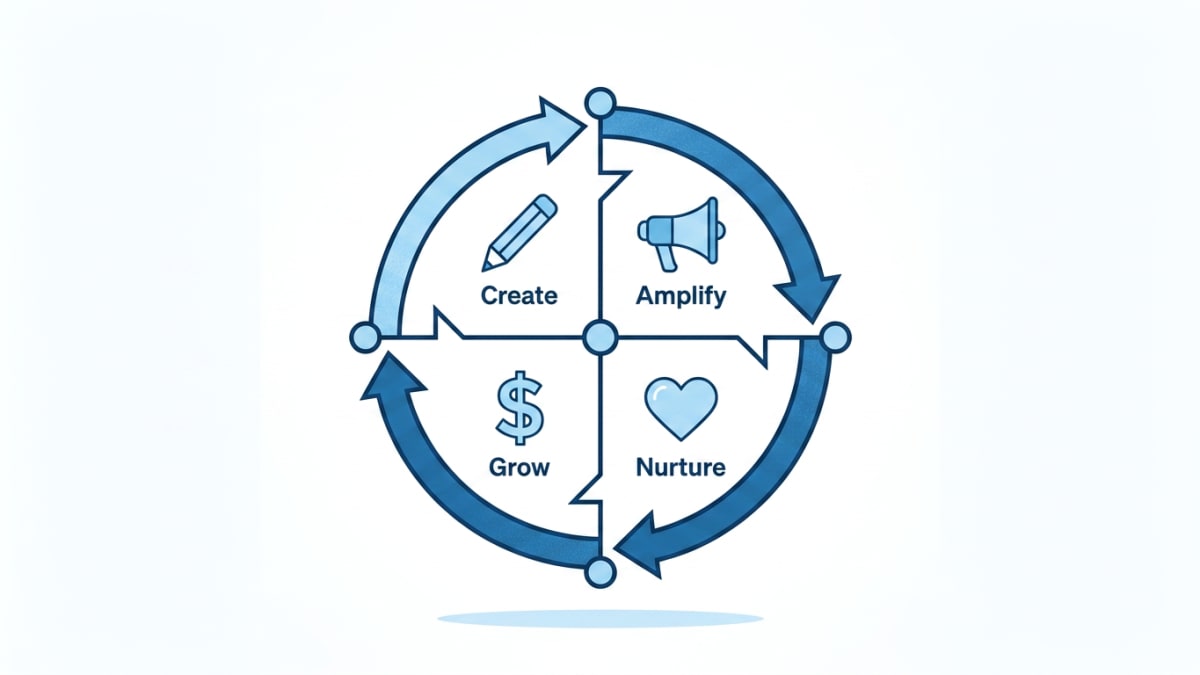
The creators actually building sustainable businesses? They're running a system. A four-stage flywheel where every piece of content feeds the next, every subscriber gets closer to buying, and every customer becomes raw material for more content.
I've used this framework to help creators build real businesses behind their personal brands (not just big follower counts). Turns out, it all starts with your newsletter, and the math backs it up. Email marketing generates $36 for every $1 spent, making it the highest-performing marketing channel. Not social. Not ads. Email.
So let me break down exactly how this works.
Why your newsletter is the hub (not your socials)
You don't own your Instagram followers. You don't own your YouTube subscribers. You don't own your X audience. You rent access to them, and the landlord changes the rules whenever they feel like it.
Your newsletter is the one channel you actually own. No algorithm deciding who sees your work. No platform throttling your reach because you didn't pay for a boost. You write something, you hit send, it lands in their inbox. Done.
This matters more than most creators realize. When you build on rented platforms, you're stacking bricks on someone else's foundation. One algorithm shift and your reach drops 60% overnight. I've watched it happen to creators with hundreds of thousands of followers who couldn't sell a $50 product because they never moved their audience to email.
Your newsletter is the center of the flywheel. Everything else feeds into it or flows out from it.
The four-stage flywheel
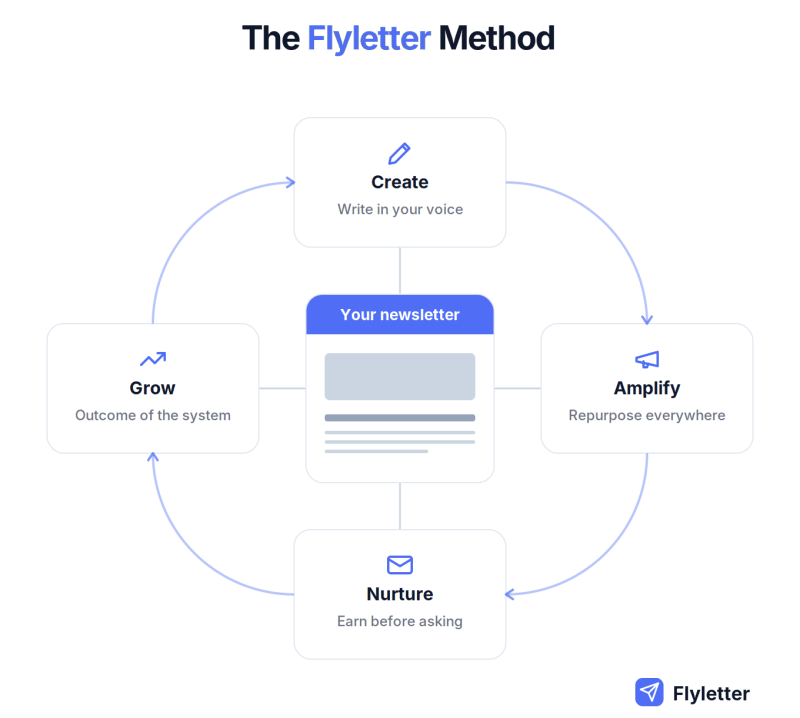
I call this four-stage flywheel the Flyletter Method. This framework positions your newsletter as a growth loop that helps you create, amplify, nurture, and grow your audience.
Stage 1: Create
Consistent, long-form content in your voice, distributed to your newsletter list. This could be article-style authority content. It could be the redistribution of a YouTube video with a write-up. The stuff that actually demonstrates your expertise and builds trust over time.
Most creators stop here. They create and create and create, sending newsletters into the void, but never build the system that turns that creation into compounding growth. Creation is the engine, not the car.
Stage 2: Amplify
Every long-form newsletter becomes multiple social posts across multiple platforms. One newsletter turns into X threads, LinkedIn posts, Substack notes, and even the foundation of your Instagram reels and TikTok videos. Each piece provides standalone value on its own platform while driving traffic back to the full newsletter, capturing emails with a lead magnet.
This is where creators leave massive growth on the table. They write their newsletter, send it to their existing list, and that's it. No amplification. No new eyeballs. The content dies after one touch.
Stage 3: Nurture
New subscribers don't buy immediately (and they shouldn't). The nurture stage is where you build trust through consistent, high-value free content. Think of it like the old Gary Vee framework: jab, jab, jab, right hook. Give, give, give, then ask.
Stage 4: Grow
Convert nurtured subscribers into customers. Courses, coaching, services, products (especially in the age of AI). Whatever your business model looks like. The point is that by the time you make the offer, your subscribers already trust you because you've been delivering value consistently.
And then something interesting happens. Your customers become content.
How Andrew Lane runs this exact framework

Andrew Lane grew his personal brand around design and AI, built a high-ticket design agency, and then created and sold products based on his client work using this same flywheel. His version looks like this:
Create. He publishes YouTube videos about design and branding. Consistent, high-quality, long-form content that demonstrates his expertise.
Amplify. Those videos drive viewers to his email list through free resources and training offers. His YouTube channel isn't just content. It's a subscriber acquisition machine.
Nurture. His newsletter delivers ongoing value to those subscribers. Design insights, case studies, tactical advice. Every email builds more trust and positions his agency as the obvious choice.
Grow. Nurtured subscribers become customers and clients. And those customers and client projects? They become case studies and content for his next round of YouTube videos and newsletters, creating a growth flywheel that fuels itself.
That last part is the piece most creators miss entirely.
The virtuous cycle nobody talks about
The flywheel's real power isn't in any single stage. It's in what happens when Stage 4 feeds back into the first stage.
Your customers give you testimonials. Their results become case studies. Their questions reveal what your audience actually struggles with (not what you think they struggle with). Their feedback shapes your next piece of content.
This is why established creators seem like they never run out of ideas. They're not more creative than you. They've built a system where their business generates content ideas automatically. Every audience interaction is potential newsletter material. Every success story is social proof that attracts new subscribers.
The flywheel compounds. Each rotation gets easier because the previous rotation generated the raw material for the next one.
How to execute this without burning out
I know what you're thinking. "Cool framework, but I'm already stretched thin just creating content."
Fair. That's why the execution layer matters as much as the strategy, and the complete guide to AI newsletter writing covers both.
With Flyletter, you can set up your brand profile once, and the platform handles the heavy lifting across multiple stages of the flywheel:
Step 1: Create your voice profile
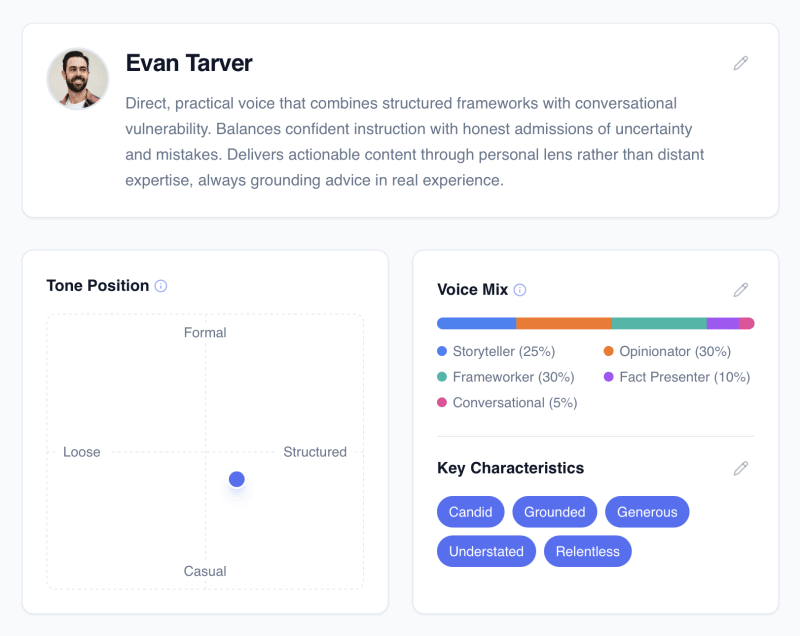
Your brand voice profile is the foundation of this flywheel, because without a distinct voice, you'll never rise above the noise. Flyletter analyzes your voice, audience, niche, unique angle, and visual style. Everything that follows uses this profile.
Step 2: Generate newsletter topics
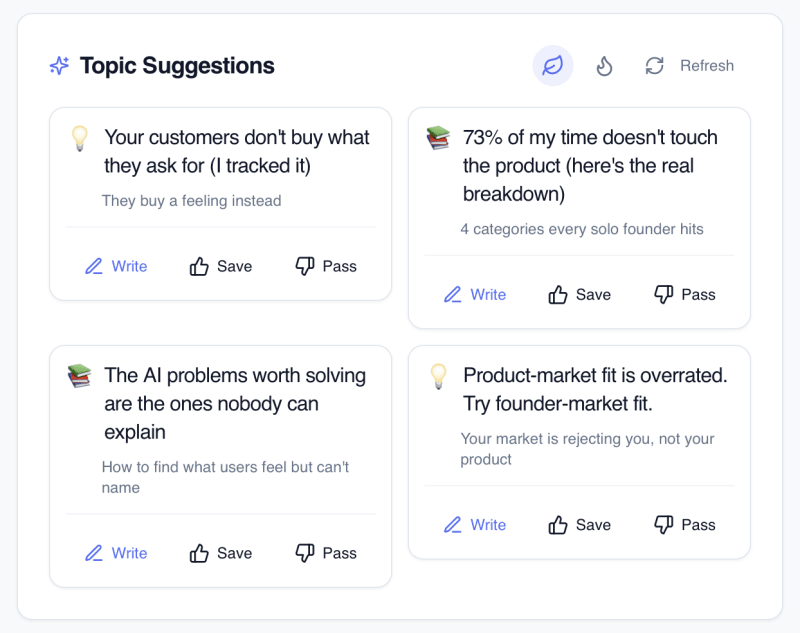
With your voice profile created, Flyletter suggests topics based on your profile. Every topic suggestion includes a content brief with a full newsletter outline that you can refine and then use to write your newsletter with Flyletter's AI content team.
Have ideas of your own? No problem, capture them with Flyletter and then develop them with the Thought Partner. No more losing ideas to that black hole you call a notes app.
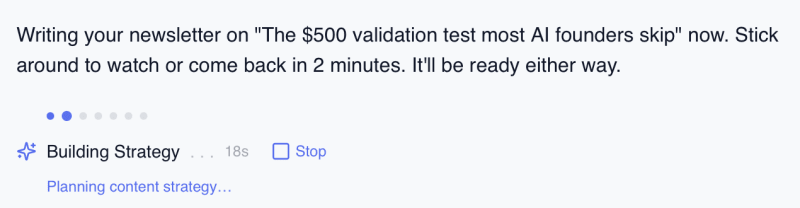
Step 3: Let Flyletter's AI content team take over
After you decide on a newsletter topic, Flyletter's AI content team takes your idea and turns it into a publish-ready newsletter draft. The AI content team includes a Strategist, Researcher, Architect, Writer, Editor, Illustrator, and Publicist, all calibrated to your brand. You review, edit, and approve.
Step 4: Create social posts and amplify
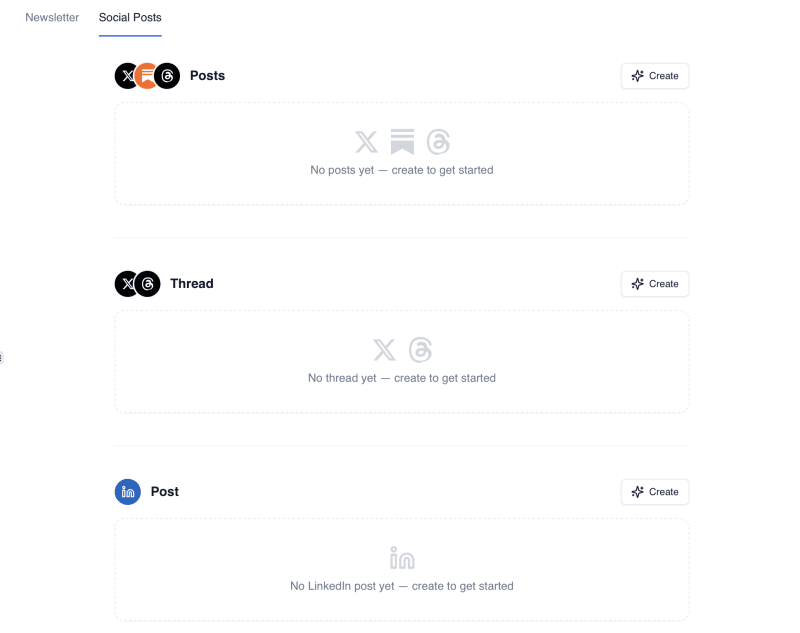
With your newsletter draft finalized, Flyletter's Publicist Agent automatically creates platform-specific social posts for you. The Publicist is trained on exactly what works across different platforms, and will create unique posts for LinkedIn, X, Threads, and Substack. Each one provides standalone value and drives readers back to your newsletter.
Step 5: Write and repeat
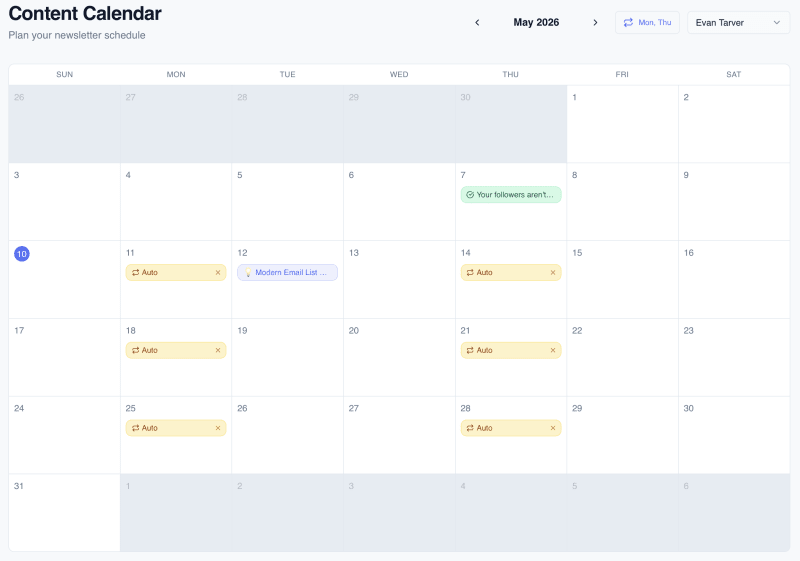
Lucky for you, Flyletter has an auto-write feature that automatically writes newsletter drafts while you sleep to keep the flywheel spinning on a consistent schedule. Just choose a writing schedule, and Flyletter does the rest. All you need to do is review and send.
Stop broadcasting. Start building.
Most creators are stuck in Stage 1, creating content and hoping for the best. The ones actually growing have connected all four stages into a loop that compounds.
Create. Amplify. Nurture. Grow. Then let your customers feed the next cycle.
Start building your flywheel today. Create your brand voice profile on Flyletter, get your first AI-generated newsletter draft, and stop treating your newsletter like a broadcast channel. It's the hub. Build accordingly.